|
|||||
|
|||||
| ||||||||||
|
Peptic Ulcers
Ulcers are formed when potent stomach acid burns a hole into the lining of the digestive tract. In addition to the major role of acid as a cause of ulcers, the following may also contribute to their formation:
There is no concrete evidence that diet contributes directly to the formation of ulcers. Thus, coffee, alcohol, spicy foods and caffeine may not cause ulcers; however, these types of food do promote the production of stomach acid which can aggravate existing ulcers. SymptomsIn many cases, people can have ulcers without any symptoms. Oftentimes, symptoms can come and go-especially after meals or with the help of antacids. Common symptoms include:
Pain in your digestive tract can also be a sign of an ulcer, although this symptom is a poor indicator of an ulcer's existence or severity. Pain can also be a sign of something more serious like cancer. Oftentimes, there may be no pain associated with ulcers and the patient may heal without treatment-- unless the condition has resulted in complications. There are 3 major types of complications resulting from ulcers:
DiagnosisThere are two types of procedures commonly used to diagnose ulcers:
TreatmentThe main purpose of ulcer treatment is to relieve pain and prevent complications such as obstruction, perforation and bleeding. Thus, the first step individuals should take, both to prevent ulcer formation and to treat existing ulcers, is to monitor their risk factors: NSAIDs and cigarettes. Special typs of treatment are available for patients who must use NSAIDs for other medical conditions. However, patients who are undergoing any ulcer treatment are strongly advised to quit smoking as this will greatly enhance the healing effects of treatment as well as protect the patient against the recurrence of ulcers. Medication are also available to treat ulcers. The first type, which is usually available without prescription, is antacids such as Maalox and Mylanta. These types of medication offer temporary relief of symptoms associated with ulcers. Side effects vary depending on the type of antacid. Magnesium based antacids usually result in diarrhea, while aluminum containing antacids result in constipation. Another type of mediation available is H2 Blockers. H2 Blockers work by preventing the interaction of histamine with stomach cells. Histamine is a protein used to promote acid production. Continuous use of this medication is generally not harmful to the patient and side effects such as headache, lethargy, breast swelling and impotence are not common. Although H2 Blockers such as cimetidine, nizatidine and famoltidine may be effective at reducing acid production, they are not effective at treating or healing ulcers that are caused by H. Pylori infection; this must be treated with a combination of antibiotics. There are a few drugs now available that are more potent and effective than H2 Blockers at healing ulcers. For example, Prilosec is a drug commonly used to treat esophageal ulcers, which are much more sensitive than other types of peptic ulcer and require a complete shutdown of stomach acid production. Medications such as Sucralfate and Misoprostol are used to strengthen and protect the lining of the stomach and are especially effective at healing ulcers that are caused by the use of NSAIDs. These two drugs are not recommended for pregnant women and women of childbearing age. In order to eliminate the existence of H. Pylori bacteria, which can be an extremely difficult and somewhat daunting task, a combination of antibiotics must be used. Antibiotics such as amoxicillin, tetracycline, metronidazole and clarithromycin are commonly prescribed in combination with H2 Blockers, Pepto-Bismol or Prilosec in order to treat H. Pylori infection. Eliminating this bacteria can also prevent the recurrence of ulcers as well as decrease the risk gastric cancer.
"Peptic Ulcer Disease." Focus on
Digestion. com. 17 Aug. 1998. |
|
BrooklynGI.com with offices in New York City
Brooklyn Queens and Manhattan. Treating patients from New York, New Jersey and
Connecticut. is dedicated to helping patients and physicians receive accurate
and up-to-date information on the Gastrointestinal tract (GI Tract) The organs
that compose the GI tract include, Esophagus, Stomach, Small Intestine, Large
Intestine (Colon), Pancreas and the Liver and Gall Bladder (Hepato-Biliary Tree)
Dr. Scott Tenner Contact
DrTenner@BrooklynGI.com
with questions or comments.
|





















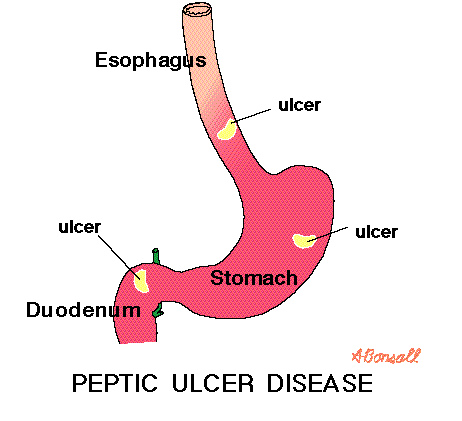 Peptic ulcers occur when the lining of the digestive
tract becomes corroded by the acidic contents of the stomach. These ulcers
occur in three parts of the digestive system: the esophagus, the stomach and the
duodenum. Ulcers affect millions of people worldwide--some of who may never
even know it. Fortunately,
there are several types of
Peptic ulcers occur when the lining of the digestive
tract becomes corroded by the acidic contents of the stomach. These ulcers
occur in three parts of the digestive system: the esophagus, the stomach and the
duodenum. Ulcers affect millions of people worldwide--some of who may never
even know it. Fortunately,
there are several types of 















